
In today’s highly competitive plastic processing industry, highly filled materials have become indispensable key materials in numerous fields due to their outstanding performance and significant cost advantages. They are widely used in industries such as construction, automotive, and home appliances. However, processing highly filled materials is no easy task, as it imposes more stringent requirements on processing equipment, particularly the core components of twin-screw extruders—the screws and mixing systems. As a leading manufacturer of twin-screw extruders, Nanjing Granuwel Machinery has leveraged its years of accumulated expertise to delve deeply into the process details of high-fill formulations such as calcium carbonate and glass fiber. We have meticulously compiled and provided a series of practical optimization recommendations aimed at helping you accurately avoid challenging issues such as screw wear and mixing inhomogeneity, significantly enhancing production efficiency while ensuring product quality reaches exceptional standards.

1. Severe Challenges in Processing Highly Filled Materials
(1) The Problem of Screw Wear
The presence of a large amount of high-hardness fillers, combined with the dual effects of high-speed screw rotation and head pressure, acts like sharp “blades” that continuously exert significant friction on the screws and barrel during processing. This dramatically accelerates wear, significantly reducing the normal service life of the equipment and increasing operational costs and maintenance workload for enterprises.
(2) The Challenge of Mixing Inhomogeneity
Due to the poor dispersibility of fillers themselves, agglomeration is highly likely to occur during processing, making it difficult to achieve a uniform mixture of materials. This inhomogeneous mixing can directly have a severe negative impact on the performance of the final product, such as reduced mechanical strength, increased surface defects, and internal structural flaws (e.g., bubbles, pitting) within the particles.
(3) Complexity of Processing Temperature Control
Highly filled materials possess unique thermal conductivity properties. Their poor thermal conductivity makes it difficult for heat to distribute evenly within the material, often leading to localized overheating or overall temperature inconsistency. This may trigger material degradation, compromising the internal structure and performance of the product.
(4) Obstacles in Melt Flowability
As the filler content increases, the flowability of the melt is significantly affected, becoming increasingly challenging. This leads to a sharp rise in extrusion pressure, not only reducing production efficiency but also potentially threatening the operational stability of the equipment and increasing energy consumption and equipment wear during the production process.
2. Comprehensive Solutions from Nanjing Granuwel Machinery
(1) Optimizing Screw Design to Reduce Wear at the Source
① Utilization of Advanced Wear-Resistant Materials
- The screws of the twin-screw extruders produced by Nanjing Granuwel Machinery are made from high-strength alloy steel as the base material. This alloy steel, meticulously formulated and rigorously quality-tested, exhibits excellent comprehensive mechanical properties.
- Building on this foundation, advanced surface hardening technologies, such as nitriding or high-performance coating treatments, are applied. Nitriding forms a dense, high-hardness nitride layer on the screw surface, effectively enhancing its hardness and wear resistance. Coating treatments, tailored to specific customer needs, can include materials with exceptional wear and corrosion resistance, such as ceramic coatings or carbide coatings. These further reduce the friction coefficient between the screw and fillers, significantly extending the screw’s service life.
The threaded components used in Granuwel equipment are not limited to conventional materials such as W6Mo5Cr4V2 (also known as M2). We also offer high-wear-resistant and high-corrosion-resistant powder alloy materials, including WR14, WR5, and WR13.
② Optimization of Thread Structure Design
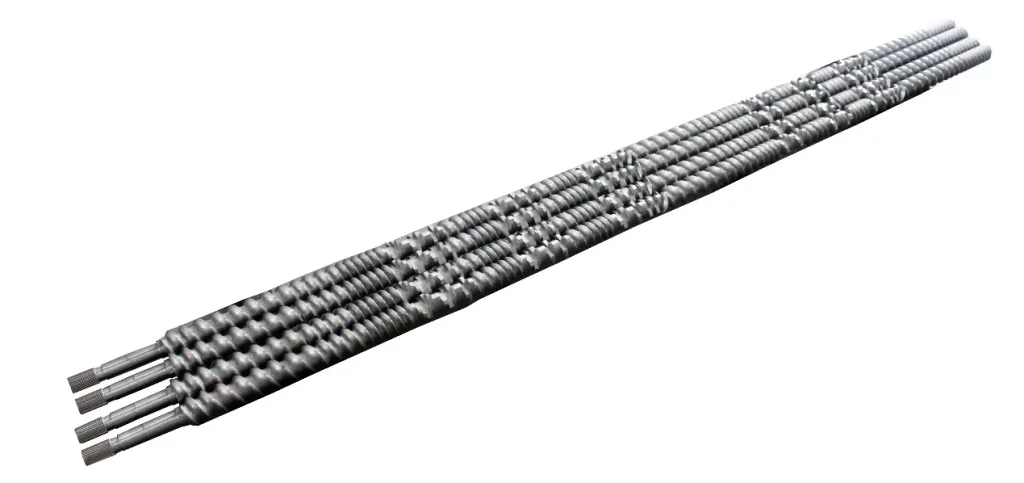
- To address the unique properties of highly filled materials, key parameters such as the thread lead angle, pitch, and flight width are adjusted. This optimization allows the screw to more effectively guide the material forward during rotation, reducing the direct impact of fillers on the screw.
- For instance, a variable-pitch thread design is employed. In the feeding section, a larger pitch is used, along with SK or SSK thread components, to increase the free volume of the screw and enhance its thrust on the material, facilitating rapid material conveyance. In the plasticizing and mixing sections, the pitch is gradually reduced to increase the material’s residence time and shear force, promoting thorough plasticization and mixing. This approach also reduces pressure concentration from fillers on the screw, effectively mitigating wear risks.
③ Modular Screw Design
- To meet the varying processing requirements at different stages, a modular screw design is adopted. The entire screw consists of multiple segments, each with distinct functions, and the thread structure and parameters of each segment are precisely calculated and optimized.
- In the feeding section, a large lead and SK-type components are used to facilitate rapid material intake and initial mixing. In the plasticizing section, the lead of the thread components is appropriately reduced to increase shear force and enhance plasticization. In the mixing section, special thread arrangements and mixing element combinations ensure uniform dispersion of fillers within the base resin while minimizing localized excessive wear, thereby extending the overall lifespan of the screw.
(2) Enhancing Mixing Efficiency to Ensure Uniform Dispersion
① Equipped with High-Efficiency Mixing Elements
- Our twin-screw extruders come standard with high-efficiency mixing elements, such as various kneading blocks, and can also provide TME toothed discs, ZME, SME, and other mixing elements with unique functionalities. These mixing components feature distinctive geometric shapes and working principles, generating intense shear, stretching, and folding effects during material flow, ensuring thorough contact and uniform mixing between fillers and the base resin.
- Kneading blocks, with their unique blade structures, repeatedly divide and merge the material, creating complex flow paths that effectively break up filler agglomerates. Toothed discs utilize their sharp edges to finely cut and disperse the material, further enhancing mixing efficiency and preventing material agglomeration. ZME and SME, with their grooved flights, allow the melt to undergo multiple backflows, thereby increasing their distributive mixing capabilities.
② Implementation of Multi-Stage Mixing Process
Introducing an advanced multi-stage mixing process concept, the uniform dispersion of fillers in the base resin is achieved by gradually increasing shear forces. In the first stage of mixing, the primary focus is on the rotation of the screw and the action of basic mixing elements to achieve initial material mixing. As the material moves forward into the second mixing zone, stronger shear forces and more complex mixing element combinations are introduced to further refine the dispersion of fillers. Subsequent stages can be adjusted based on actual needs, ensuring uniform dispersion of fillers throughout the mixing process while avoiding material degradation caused by excessive shear.
③ Precision Optimization of Screw Speed
Based on factors such as the type of fillers, particle size, and content ratio, the optimal screw speed range is determined through precise theoretical calculations and extensive experimental validation. When processing fillers with smaller particle sizes and higher content, the screw speed is appropriately reduced to ensure sufficient time for thorough mixing and dispersion. For fillers with larger particle sizes and relatively lower content, the screw speed can be increased to enhance production efficiency while ensuring mixing effectiveness.
(3) Precision Temperature Control System to Effectively Avoid Local Overheating
① Multi-Zone Temperature Control System
- The twin-screw extruder is equipped with an advanced multi-zone independent temperature control system, which divides the entire screw into multiple independent temperature control zones. Our temperature control systems are all equipped with PID control. The temperature of each zone can be precisely set and controlled in real-time according to processing requirements.
- Intelligent temperature sensors monitor the temperature of each zone in real-time and transmit the data to the central control system. The control system automatically adjusts heating power or cooling measures based on preset temperature values and actual temperature deviations, ensuring that the temperature in each processing zone remains within the optimal working range. This prevents material degradation and product quality issues caused by localized overheating or temperature inconsistencies.
② Optimized Cooling System
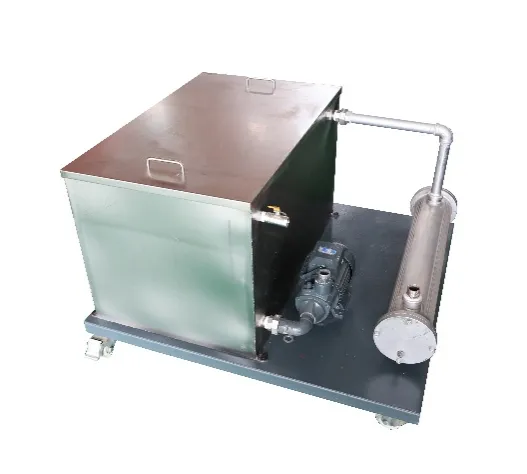
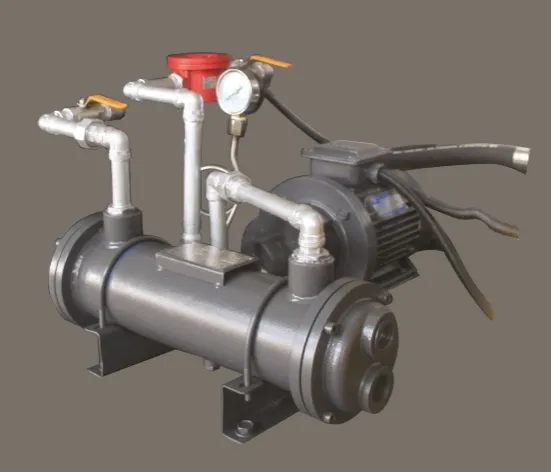
- Considering the thermal conductivity characteristics of highly filled materials, the cooling system has been specifically optimized. An efficient cooling medium circulation system, such as a water cooling system or lubricating oil cooling system, is employed. Cooling channels are strategically placed in critical areas of the barrel and screw to ensure uniform distribution of the cooling medium, effectively dissipating heat generated during processing.
- Additionally, intelligent cooling control technology is integrated to automatically adjust the flow rate and temperature of the cooling medium based on changes in melt temperature. This achieves precise control of the melt temperature, ensuring temperature stability throughout the entire processing process and providing a reliable thermal environment for producing high-quality products.
(4) Enhancing Melt Flowability to Significantly Reduce Extrusion Pressure
① Rational Optimization of Screw Configuration Design
- Based on the filler content and the rheological properties of the melt, the screw configuration is precisely adjusted. By optimizing the length ratios of the feeding, plasticizing, and metering sections, as well as the mixing gradient, the material undergoes a more rational mixing and transformation process within the screw.
- In the feeding section, the use of different lead components is optimized to facilitate smooth material intake and initial compaction. In the plasticizing section, the combination of mixing blocks is optimized to enhance shear force and plasticization. In the venting section, an appropriate compression ratio is maintained to prevent material leakage at the vent port, ensuring stable delivery of the melt to the die head. This effectively reduces extrusion pressure, improving production efficiency and product quality.
② Scientific Optimization of Formulation Process (Adjusting Lubricant Dosage)
- Based on different raw material formulations and production process conditions, the impact mechanisms of lubricant types, dosage, and addition methods on melt flowability are thoroughly studied to optimize the best lubricant formulation and usage amount.
- An appropriate amount of lubricant can form a uniform lubricating film on the surface of material particles, reducing frictional resistance between particles and enhancing the flowability of the melt. Additionally, it improves the interfacial compatibility between the material and the screw and barrel walls, reducing material adhesion and further lowering extrusion pressure. This enhances the stability and continuity of the production process.
3. Equipment Maintenance and Additional Recommendations: Extending Equipment Lifespan and Ensuring Production Stability
(1) Importance and Basic Principles of Equipment Maintenance
① Importance of Maintenance
For twin-screw extruders processing highly filled materials, prolonged operation under harsh conditions and the presence of large amounts of inorganic fillers and additives in the material lead to significant wear on the equipment. Therefore, regular equipment maintenance is crucial. Proper maintenance not only extends the equipment’s service life and reduces failure rates and repair costs but also ensures that the equipment remains in optimal operating condition, guaranteeing the stability and consistency of product quality.
② Introduction to Basic Principles
- Prevention First: During daily production, emphasis should be placed on preventive maintenance of the equipment. Through regular inspections, cleaning, lubrication, and other measures, potential faults can be identified and eliminated in a timely manner, preventing equipment failures.
- Regular Maintenance: Establish a comprehensive equipment maintenance plan to conduct thorough maintenance at specified intervals. This includes inspection, tightening, adjustment, and replacement of wear-prone parts for key components such as screws, barrels, gearboxes, and motors.
- Proper Operation: Strengthen the training and management of operators to ensure they strictly adhere to the equipment’s operating procedures, avoiding equipment damage and safety accidents caused by improper operation.
- Record Management: Maintain detailed records of equipment maintenance, operating parameters, fault information, and other data, and establish an equipment file management system. By analyzing and summarizing this data, the operational status and technical performance trends of the equipment can be understood in a timely manner, providing a scientific basis for maintenance and upgrades.
(2) Specific Maintenance Measures and Recommendations
① Daily Inspection and Cleaning
- Before each shift, operators should conduct an external inspection of the equipment to check for abnormal noises, vibrations, leaks, etc. Inspect the bolts at all connection points for looseness and tighten them promptly if necessary.
- After work, promptly empty the screw’s collected material, clean the die head, and remove dust, oil stains, and material residues from the equipment surface. Pay special attention to the screw, barrel surface, and die areas, using specialized tools for thorough cleaning to prevent material buildup and solidification, which could affect heat dissipation and normal operation. For hard-to-reach areas, compressed air can be used for cleaning.
② Regular Lubrication and Tightening
- Based on the equipment’s operating time and frequency, regularly lubricate the transmission parts, bearings, gears, etc. Select the appropriate type and grade of lubricant and follow the specified lubrication methods and quantities. Generally, an appropriate amount of grease or lubricating oil should be applied to each lubrication point before each shift. For critical parts such as the main motor bearings and gearbox gears, a comprehensive lubrication check and replenishment should be performed weekly.
- During equipment operation, regularly inspect the tightness of bolts at various locations, especially critical bolts such as those connecting the screw to the gearbox and the barrel to the frame. Due to vibrations and impacts during operation, bolts may loosen, so a comprehensive bolt tightening inspection should be conducted at least monthly. For bolts showing signs of looseness, use a torque wrench to tighten them according to the specified torque values.
③ Inspection and Maintenance of Key Components
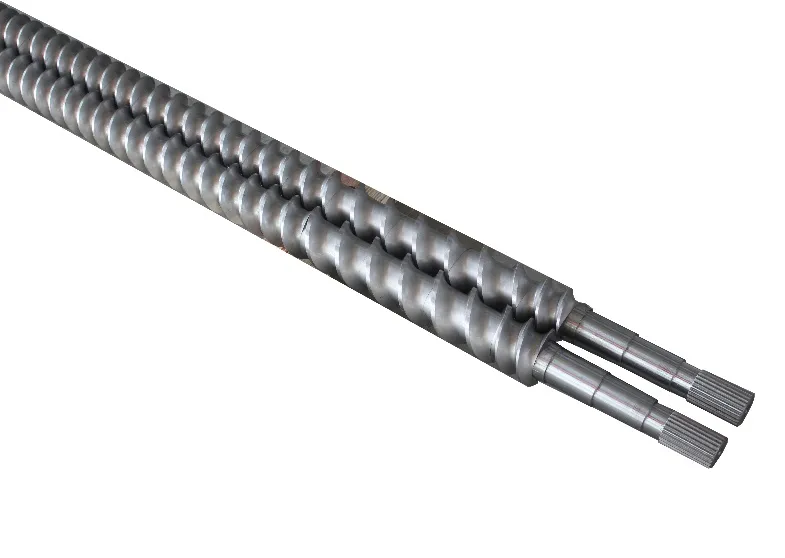
- The screw is one of the core components of the twin-screw extruder and should be regularly inspected and maintained. A comprehensive disassembly and inspection of the screw should be conducted quarterly to check for surface wear, the integrity of the thread structure, and the normalcy of the meshing gap between screws. If surface wear or corrosion is detected, timely repair or replacement is necessary. For damage or deformation of the thread structure, appropriate repair measures or screw replacement should be taken based on the specific situation.
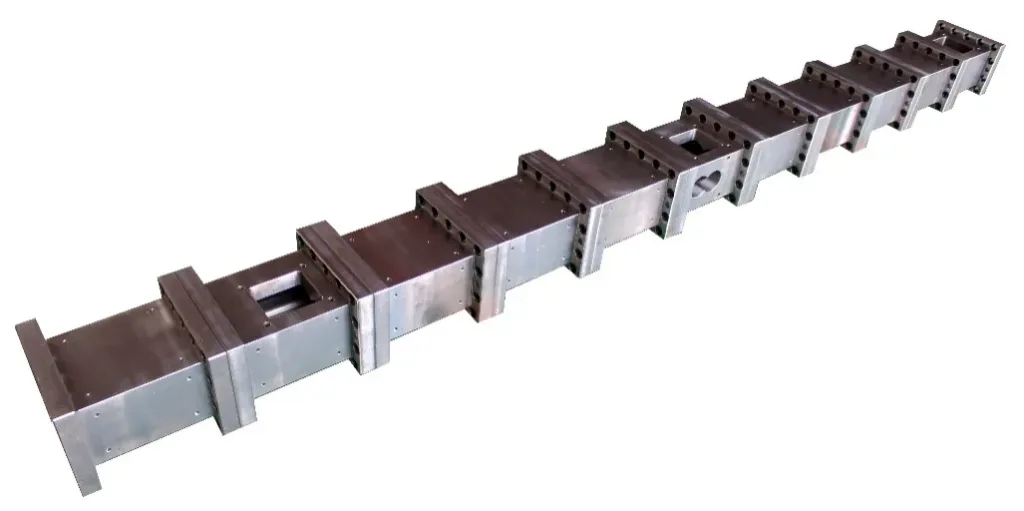
- The barrel is also one of the critical components of the equipment and requires regular inspection and maintenance. Every six months, the barrel should undergo internal cleaning and inspection, focusing on the wear condition of the inner wall, surface roughness, and whether the clearance between the barrel and screw meets requirements. If scratches or deep wear grooves are found on the inner wall of the barrel, timely repair is necessary. For barrel deformation issues, corrective measures or barrel replacement should be implemented based on the actual situation.
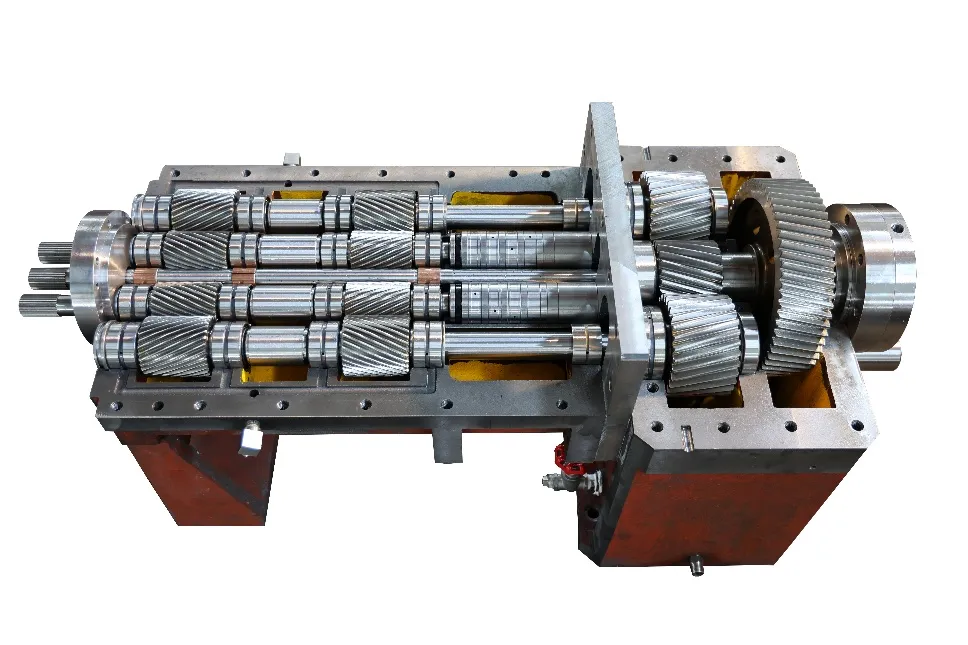
- The gearbox is the core component of the equipment’s power transmission, and its operating condition directly affects production efficiency and stability. The gearbox should undergo an oil inspection monthly, and the lubricating oil should be replaced every three months. Regularly check the oil level, oil cleanliness, and the presence of impurities such as metal shavings in the gearbox. Additionally, periodically inspect the gear meshing condition, including gear wear, tooth surface contact area, and whether the side clearance and top clearance meet requirements. If gear wear or damage is detected, timely replacement or repair is necessary.
④ Inspection and Maintenance of the Electrical System
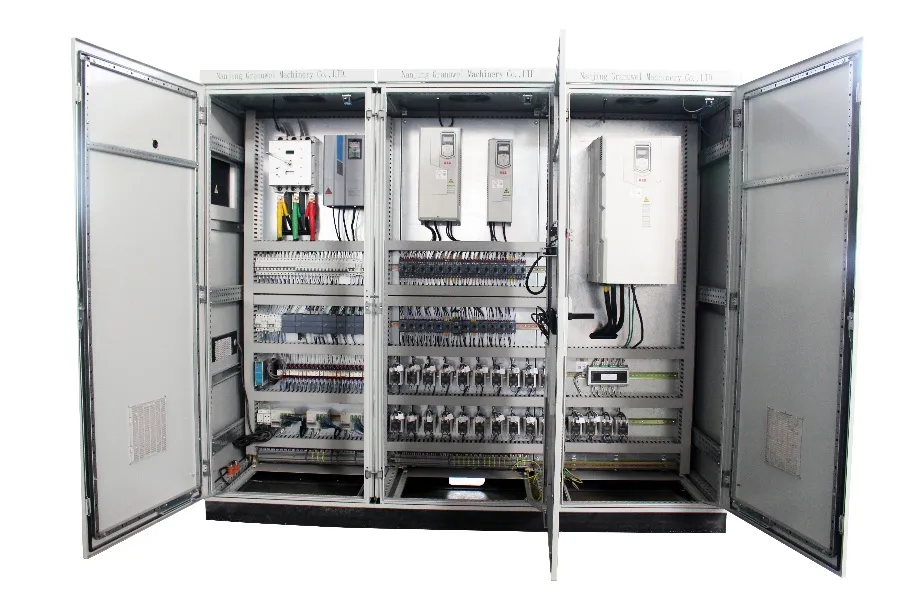
The electrical system is a crucial component for the normal operation of the equipment and should be regularly inspected and maintained. Every quarter, inspect the electrical components of the control system, including motors, inverters, controllers, and sensors. Check whether the wiring of each electrical component is secure, the insulation performance is adequate, and if there are any signs of overheating. Inspect the dust cleaning status inside the electrical cabinet and the operating condition of the cooling fans. Test the insulation resistance of the motor to ensure it meets safety requirements. If any electrical components are found to be damaged or aged, replace or repair them promptly. Additionally, regularly back up and inspect the software programs and parameter settings of the electrical control system to prevent equipment failures caused by program errors or parameter loss.
In conclusion, proper equipment maintenance strategies and measures are key to ensuring the long-term stable operation and efficient production of twin-screw extruders for highly filled materials. If you encounter any issues or have further questions while using twin-screw extruders, please feel free to contact the professional team at Nanjing Granuwel at any time. We are committed to providing you with comprehensive technical support and solutions!