
In the realm of polymer processing and plastic manufacturing, single screw extrusion stands out as the most commonly used technique. Its versatility, cost-efficiency, and simplicity make it an ideal choice for producing continuous plastic profiles such as pipes, sheets, films, and more. This article dives deep into the core of single screw extrusion—explaining how it works, why it remains so widely used, and how to choose the right extruder for your application.
What is Single Screw Extrusion?
Single screw extrusion is a continuous manufacturing process used to melt and shape polymer materials. It involves a single rotating screw housed within a heated barrel. As raw plastic materials—usually in the form of pellets, granules, or powder—are fed into the extruder, the screw pushes them forward through different zones where the material is melted, mixed, and finally pushed through a die to form a specific shape. The melting process relies on conductive heating from the barrel and viscous dissipation (shear heat). Optimal screw speed (RPM) and temperature profile are critical to avoid unmelted particles or thermal degradation.
This method is widely adopted across industries for processing thermoplastics such as polyethylene (PE), polypropylene (PP), polystyrene (PS), polyvinyl chloride (PVC), and engineering plastics like ABS, PA, and PEEK.
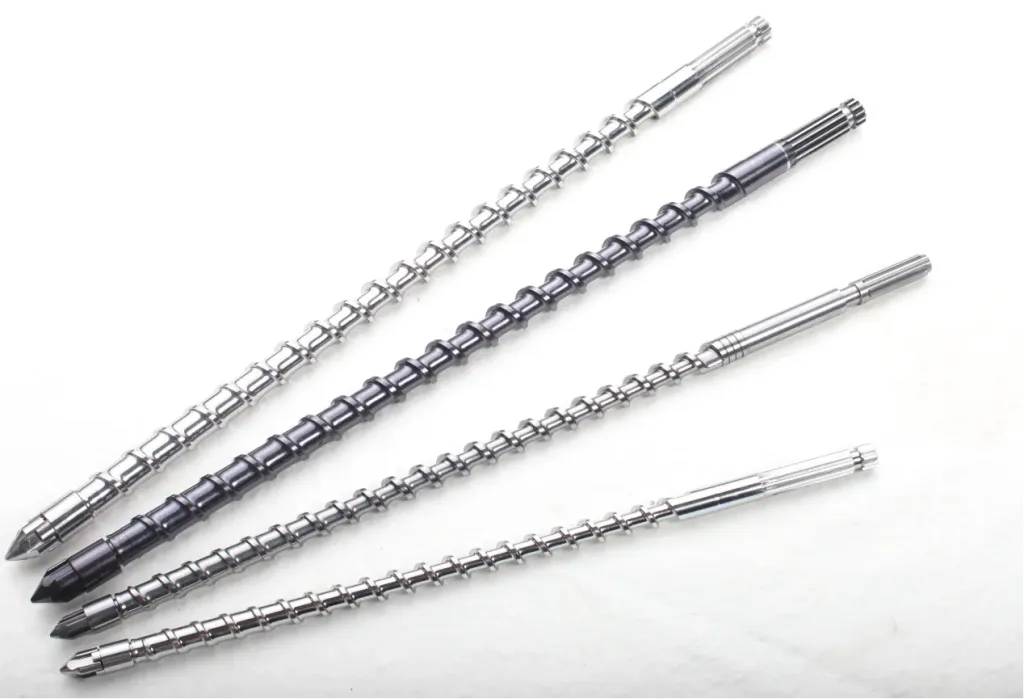
Key Components of a Single Screw Extruder
To better understand the extrusion process, let’s take a look at the primary components of a single screw extruder:
1. Feed Hopper
This is where the plastic material enters the system. Gravity typically feeds the raw material into the barrel.
2. Barrel and Screw
The heart of the system, the screw inside the barrel rotates to convey material forward. It consists of three zones:
- Feed Zone: Material is introduced and begins to warm. Material is compressed and preheated to ~50-80°C (depending on polymer Tg), with screw flight depth typically 3-4 times deeper than the metering zone.
- Compression Zone: Material is compacted and melted. Shear rate peaks here (often 100-500 s⁻¹), transforming solid pellets into a continuous melt.
- Metering Zone: Melted polymer is homogenized and prepared for extrusion.
3. Heaters and Temperature Control Units
Precise temperature control is essential. Barrel heaters, often electrically powered, ensure the plastic reaches its melting point without degrading. PID-controlled zone heating (3-8 zones) is standard, with thermocouples ensuring ±1°C accuracy.
4. Die
The final shape of the extruded product is determined by the die. Whether it’s a sheet, pipe, filament, or film, the die customizes the output.
5. Cooling and Take-up System
After extrusion, the product must be cooled using air or water baths, then pulled by take-up rollers to maintain continuous flow and uniformity.
Working Principle of Single Screw Extrusion
The process starts with feeding plastic materials into the hopper. The rotating screw conveys this material forward through friction and mechanical force. As the material advances, it is exposed to rising temperatures and pressure, which softens and eventually melts the plastic. Simultaneously, the screw’s geometry ensures proper mixing and homogenization of additives and pigments if present.
Once melted and mixed, the polymer passes through the die, taking on its final shape. Post-extrusion cooling solidifies the product for downstream operations such as cutting, coiling, or further shaping.
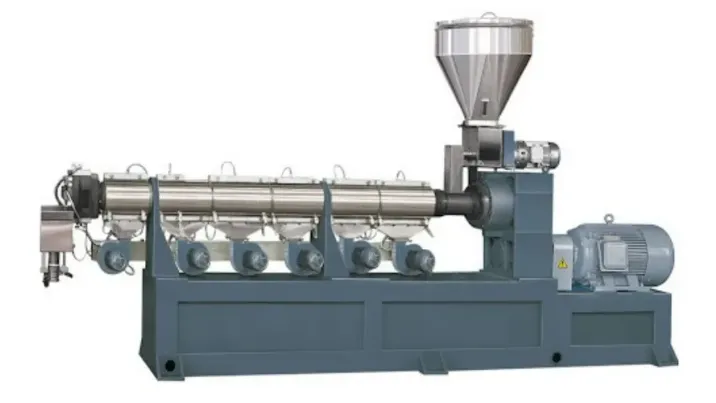
Advantages of Single Screw Extrusion
Single screw extrusion remains popular for several compelling reasons, especially when paired with innovative machines like the Granuwel GDE Series Single Screw Extruder. Below are the key benefits of this extrusion technology, enhanced by Granuwel’s advanced design:
1. High-Speed High-Torque Screw Design
For high-volume material extrusion, our Granuwel-engineered high-speed, high-torque single screw ensures complete plasticization and melting of materials while optimizing screw design to increase rotational speed. This guarantees high-output extrusion. Additionally, it reduces equipment footprint, saving on installation space and investment costs.
2. High Transmission Efficiency and Low Energy Consumption
Granuwel’s machine features a direct coupling between the motor and transmission box, ensuring high transmission efficiency and compact structural design. This not only reduces energy consumption but also minimizes mechanical losses, resulting in a more cost-effective production setup.
3. Durable Gearbox and Efficient Lubrication
The use of a brand-namehard tooth surface gearbox and a lubrication system that combines semi-infiltration with forced spray ensures long-term durability and stable operation even under high load and continuous usage conditions.
4. Improved Exhaust and Devolatilization System
Unlike conventional extruders, Granuwel machines are equipped with avacuum exhaust port and screw exhaust structure. This allows for the effective removal of impurities such as moisture and low molecular substances produced during plasticization. The result is a cleaner melt and a higher-quality finished product.
5. Extended Service Life of Core Components
The screw and barrel are made from 38CrMoAlA alloy steel, known for its strength and wear resistance. Additionally, Granuwel offers optional screw edge welding with wear-resistant alloy, significantly improving the lifespan of the extruder, especially when processing recycled or abrasive materials.
6. Customizable Heating and Cooling Systems
Granuwel provides a range of heater options—cast copper, cast aluminum, or ceramic heaters—to suit different customer needs. The barrel can be cooled via air (fan) or circulating water, allowing precise thermal control. The advanced PID temperature control system with auto-tuning further enhances process accuracy.
7. Enhanced Feeding Design
The specially designed feeding port increases material throughput and ensures stable feeding. This is particularly important for high-volume operations or when working with recycled plastics with inconsistent bulk densities.
8. Flexible Electrical Control Options
From standard digital displays tohigh-end PLC-based control systems, Granuwel’s extruders are available in configurations that match a wide range of customer preferences. The electrical system is intuitive and allows for real-time monitoring, diagnostics, and process optimization.
9. Versatility and Application Range
Thanks to the advanced exhaust function and durable design, Granuwel’s single screw extruders can handle not just virgin materials but also recycled plastics and blends. This widens the scope of applications across packaging, construction, automotive, wire & cable, and environmental recycling industries.
Common Applications of Single Screw Extrusion
Because of its reliability and adaptability, single screw extrusion finds application across multiple industries:
- Plastic Pipe & Tube Production: HDPE and PVC pipes for plumbing, agriculture, and drainage systems and even industrial fluid transport.
- Sheet and Film Manufacturing: Packaging films, thermoforming sheets, and agricultural mulch films, and protective films used in construction and manufacturing.
- Cable Coating: Single screw extrusion is employed to apply insulating and protective layers on electrical wires and cables, ensuring durability and safety.
- Filament Production: Commonly used for producing 3D printing filaments, textile fibers, and other fine filaments required in industrial and consumer applications.
- Recycling and Pelletizing: Single screw extruders are vital in reprocessing waste plastics into reusable pellets, contributing to sustainable manufacturing practices.
- Compounding: These machines are often utilized for blending polymers with additives, fillers, or colorants to create customized materials tailored to specific applications.
- Food and Pharmaceutical Extrusion: In the food and pharmaceutical industries, single-screw extruders are used to produce items such as pasta, snacks, pet food, and even pharmaceutical tablets or capsules.
- Rubber Extrusion: They are applied in the rubber industry for manufacturing hoses, belts, and seals that are used in automotive and industrial applications.
- Adhesive and Sealant Production: Single screw extrusion is also employed in the production of hot melt adhesives, sealants, and other specialty materials.
Conclusion
Single screw extrusions a cornerstone of plastic processing, offering simplicity, efficiency, and versatility. Whether you’re a small manufacturer or an industrial-scale processor, choosing the right extruder will directly impact product quality, operational efficiency, and cost control.
When selecting a single screw extruder, prioritize trusted manufacturers, customizable options, and machines built for your specific processing goals.