
Introduction
Twin screw extruders are widely used in industries such as plastics, food processing, and pharmaceuticals due to their versatility, efficiency, and ability to handle complex materials. However, understanding the energy consumption of a twin screw extruder is crucial for optimizing production processes, reducing costs, and minimizing environmental impact. This article explores the factors influencing the energy consumption of twin screw extruders and provides a detailed analysis of their energy usage.
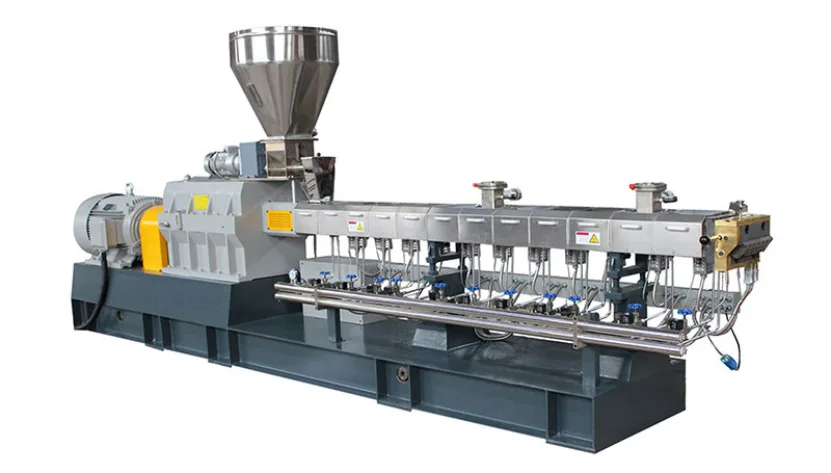
Co-rotating Twin Screw Plastic Extruder >>
Energy Usage in Twin Screw Extruders
The energy consumption of a twin screw extruder is determined by several factors, including motor power, screw design, material properties, processing conditions, and auxiliary equipment. On average, a twin screw extruder may consume between 0.2 and 1.0 kWh per kilogram of processed material, depending on the application and material type.
1. Motor Power
The primary energy consumption in a twin screw extruder comes from the motor, which drives the screws. The motor’s power rating typically ranges from 10 kW to 500 kW, depending on the size and application of the extruder. Higher motor power generally indicates higher energy consumption but also provides the capability to process tougher or more viscous materials.
2. Screw Design
The screw geometry, including its length-to-diameter (L/D) ratio, pitch, and flight depth, significantly affects energy consumption. Longer screws with higher L/D ratios require more energy to rotate but allow for better mixing and higher output rates. Similarly, screw designs optimized for specific materials or tasks (e.g., high-shear kneading elements) may consume more energy.
3. Material Properties
The properties of the material being processed, such as viscosity, moisture content, and temperature sensitivity, play a critical role in determining energy usage. High-viscosity polymers or materials with high moisture content often require more energy to process. Preheating materials before feeding them into the extruder can reduce the energy demand.
3. Material Properties
The properties of the material being processed, such as viscosity, moisture content, and temperature sensitivity, play a critical role in determining energy usage. High-viscosity polymers or materials with high moisture content often require more energy to process. Preheating materials before feeding them into the extruder can reduce the energy demand.
4. Processing Conditions
Processing parameters such as screw speed, barrel temperature, and backpressure significantly influence energy consumption. Higher screw speeds and barrel temperatures generally lead to increased energy usage. However, optimizing these parameters for specific materials and outputs can improve efficiency.
5. Auxiliary Equipment
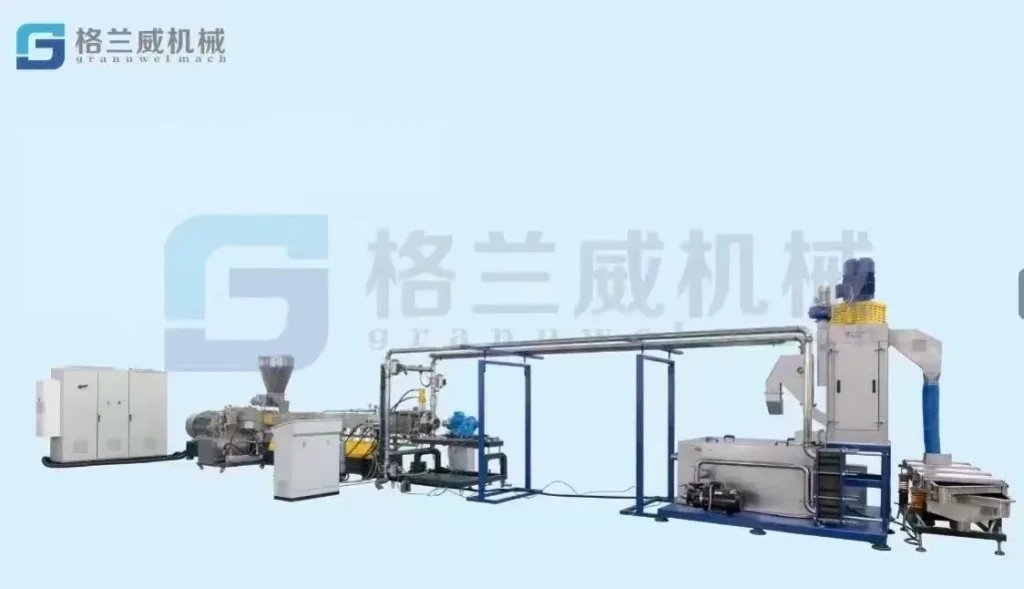
Additional energy is consumed by auxiliary equipment such as feeders, cooling systems, and downstream processing units (e.g., pelletizers or cutters). These components can account for up to 20-30% of the total energy consumption of the extruder system.
Energy Optimization Strategies
To reduce the energy consumption of twin screw extruders, manufacturers and operators can implement several strategies:
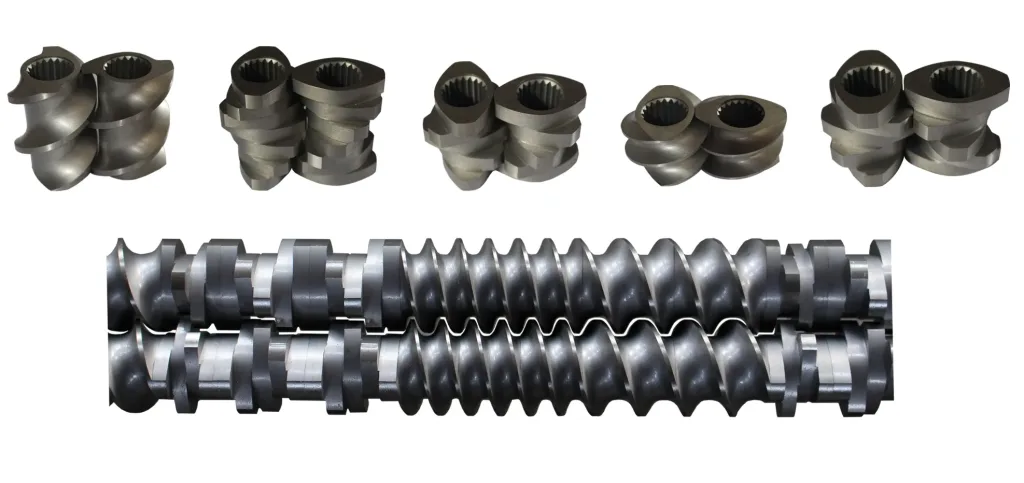
Screw Elements for Twin Screw Extrusion Machines >>
1. Optimize Screw Design
Using screw designs tailored to the material and application can improve energy efficiency. For example, optimized kneading elements and proper L/D ratios can minimize unnecessary shear and reduce energy consumption.
2. Use Energy-Efficient Motors
Replacing standard motors with energy-efficient models, such as those with variable frequency drives (VFDs), can significantly reduce energy usage, especially in operations with varying loads.
3. Material Properties
The properties of the material being processed, such as viscosity, moisture content, and temperature sensitivity, play a critical role in determining energy usage. High-viscosity polymers or materials with high moisture content often require more energy to process. Preheating materials before feeding them into the extruder can reduce the energy demand.
3. Preheat Materials
Preheating materials before they enter the extruder reduces the energy required for heating within the barrel. This is especially effective for materials with high moisture content or low thermal conductivity.
4. Optimize Process Settings
Regularly review and adjust process parameters such as screw speed, barrel temperature, and feed rate to minimize energy consumption while maintaining product quality.
5. Maintain Equipment
Regular maintenance of the extruder, including cleaning, lubrication, and checking for wear, ensures that the machine operates at peak efficiency and minimizes energy waste.
Conclusion
The energy consumption of a twin screw extruder depends on multiple factors, including motor power, screw design, material properties, and processing conditions. While energy usage can vary widely—from 0.2 to 1.0 kWh/kg—implementing optimization strategies can significantly reduce energy costs and environmental impact. As energy efficiency becomes increasingly important in industrial processes, understanding and managing the energy consumption of twin screw extruders will remain a key focus for manufacturers and operators.
For more information, please feel free to contact GRANUWEL EXTRUSION.