
What Is PLA?
Polylactic Acid, commonly referred to as PLA, is a biodegradable thermoplastic derived from renewable plant sources. These sources include corn starch, sugarcane, cassava, and other starch-rich agricultural crops. Unlike petroleum-based plastics, PLA is produced through a fermentation and polymerization process that transforms natural sugars into lactic acid, which is then polymerized to create PLA resin.
PLA is widely praised for its environmental benefits. It decomposes under industrial composting conditions, leaving no toxic residues behind. Due to its safety and non-toxicity, PLA is widely used in applications that come into contact with food and the human body. Common uses include:
- Disposable cutlery and tableware
- Food containers and trays
- Medical packaging and surgical implants
- 3D printing filaments
- Agricultural films and biodegradable bags
Its rising popularity aligns with growing global demand for sustainable alternatives to traditional plastics.

What Is PLA Sheet Extrusion?
PLA sheet extrusion is the process of converting PLA pellets into flat, solid sheets using heat and pressure. This process involves melting the PLA material and forcing it through a flat die to form thin sheets. Once extruded, these sheets are cooled, stretched, and cut into desired sizes.
While the general extrusion principles are similar to conventional plastic extrusion, PLA extrusion requires specific process parameters and equipment considerations due to its sensitivity to heat and moisture. Unlike traditional plastics such as PET or PP, PLA is more prone to thermal degradation, so temperature control and moisture management are critical.
Key Benefits of PLA Sheet Extrusion:
- Biodegradability: PLA sheets break down naturally under industrial composting environments, reducing plastic waste.
- Non-Toxicity: Suitable for direct food contact and medical applications.
- Recyclability: Scrap PLA sheets can be reprocessed in the same extrusion line.
- Environmental Compliance: Meets regulations such as EU EN13432 and ASTM D6400 for compostability.
PLA sheet extrusion is increasingly favored for packaging applications where sustainability is a core requirement, making it ideal for eco-friendly brands.
PLA Sheet Extrusion Line: Components and Features
A PLA sheet extrusion line typically includes the following core components:
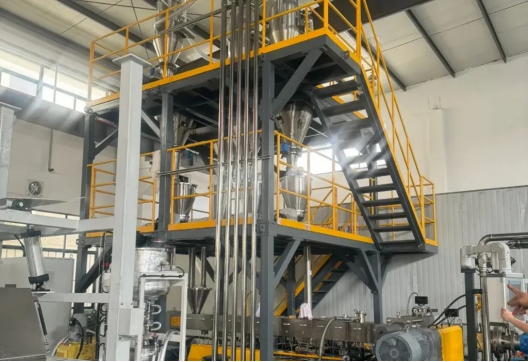
1. Diversified Feeding System
PLA materials often require precise blending and controlled feeding due to their sensitivity. A diversified feeding system enables the handling of different PLA grades, including pre-compounded or masterbatch materials, along with additives like nucleating agents or impact modifiers.
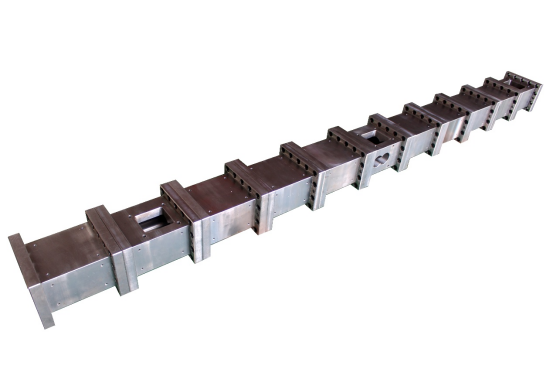
2.Building Block Type Twin Screw Barrel and Screw Elements
Twin screw extruders are essential for high-shear mixing and ensuring uniform melt quality. The building block design allows for customized configurations to meet specific processing needs. These modular screw elements provide the flexibility to optimize the shear, mixing, and residence time for different PLA formulations.
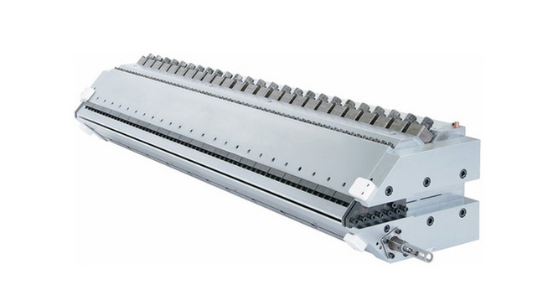
3.Forming Mold (Sheet Die Head)
The forming die is a flat sheet die that determines the width and thickness of the final PLA sheet. Precision is vital to ensure uniform sheet quality across the entire width. Flow channels are carefully engineered to manage the melt flow and reduce residence time, minimizing degradation.
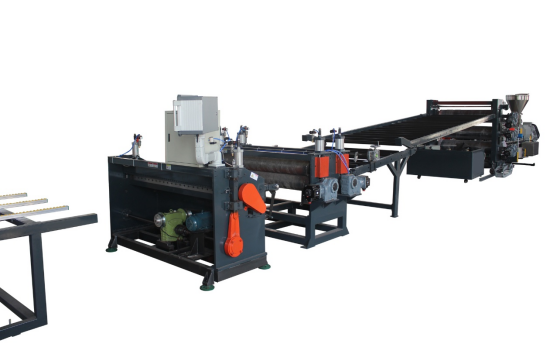
4.Cooling and Calendering System
After forming, the molten PLA sheet passes through a series of chilled rollers to reduce its temperature and improve surface smoothness. Proper cooling is vital for maintaining dimensional stability and mechanical properties.
5.Haul-Off and Winding System
The cooled sheet is drawn through rollers and wound onto rolls or cut into sheets. Tension control and alignment systems ensure the final product meets thickness and quality standards.
Recommended Equipment: Granuwel PLA Sheet Extrusion Line
One of the most advanced solutions on the market is the Granuwel PLA Sheet Extrusion Line, which offers several proprietary technologies designed specifically for PLA processing.
Key Features of the Granuwel Line:
- Patent Non-Crystallization Drying System: PLA is highly sensitive to moisture. Traditional drying systems require crystallization before drying to prevent hydrolysis. Granuwel’s proprietary Non-Crystallization Drying System revolutionizes PLA drying by eliminating the mandatory pre-crystallization step required in traditional processes. It enables the direct drying of amorphous PLA flakes, significantly simplifying the process flow. This approach not only drastically reduces energy consumption but also prevents hydrolysis and thermal degradation, preserving the material’s intrinsic viscosity (IV) and quality.
- Energy Efficiency: The drying system significantly lowers operational energy demands, contributing to sustainable production goals.
- Multiple Configuration Options: Granuwel offers flexible configurations spanning Lab scale (for R&D and small batches), Pilot scale (for testing and medium volumes), to full Industrial scale (for high-volume manufacturing), ensuring solutions are available for startups, pilot projects, and large-scale production facilities.
- Enhanced Sheet Quality: With optimized temperature and pressure controls, the Granuwel line ensures consistent sheet thickness, excellent transparency, and smooth surfaces—ideal for high-end packaging applications.
For more details, visit: Granuwel PLA Sheet Extrusion Line
Conclusion
Investing in a high-performance PLA sheet extrusion line—such as the Granuwel system—ensures not only production efficiency but also alignment with environmental regulations and consumer preferences. For manufacturers aiming to lead in the circular economy, PLA extrusion is more than a trend—it’s a necessity.
