
Introduction
Plastic extrusion is a critical manufacturing process that transforms raw plastic materials into functional products. Whether you are in a research environment or managing large-scale production, choosing the right extruder can significantly impact your workflow and product quality. This article focuses on the laboratory plastic extruder, a specialized machine designed for small-batch production, testing, and development, and contrasts it with traditional industrial plastic extruders.
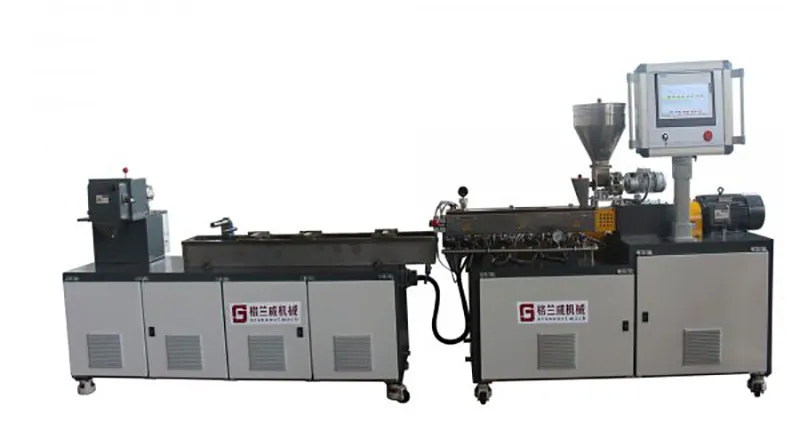
TOP China Manufacturer: Granuwel
Granuwel stands out as a professional lab extruder manufacturer based in China, renowned for its commitment to quality and innovation. Their range of laboratory plastic extruders is designed to meet the rigorous demands of research and development. By offering precision control, robust construction, and customizable features, Granuwel ensures that engineers and scientists can efficiently experiment with new plastic formulations and conduct thorough quality tests. With a focus on continuous improvement and customer satisfaction, Granuwel’s products have earned a reputation both domestically and internationally for reliability and performance. For more information, visit Granuwel.
What is a Laboratory Plastic Extruder?
A laboratory plastic extruderis a compact, precision-engineered machine typically used in research and development settings. These extruders are built to allow engineers and scientists to experiment with different plastic formulations, conduct trials, and optimize processing parameters before scaling up to full production. Key features include:
- Precision Control: Laboratory extruders provide advanced control over critical parameters such as temperature, pressure, and screw speed, enabling precise manipulation of extrusion conditions for experimental purposes.
- Compact Design: Their smaller size compared to industrial extruders means they occupy less space and are easier to operate in a lab environment.
- Flexibility: These machines can process various polymers and additives, enabling the creation of new plastic compounds and materials.
- Versatility: With functions such as conveying, plasticizing, refining, cutting, venting, building pressure, and extrusion, a single device can handle most new material development tasks with ease.
- Accurate Measurement and Feeding Methods: Laboratory extruders are often equipped with feeding methods like volumetric feeding and weight loss feeding, ensuring strict adherence to formulations and consistent product quality.
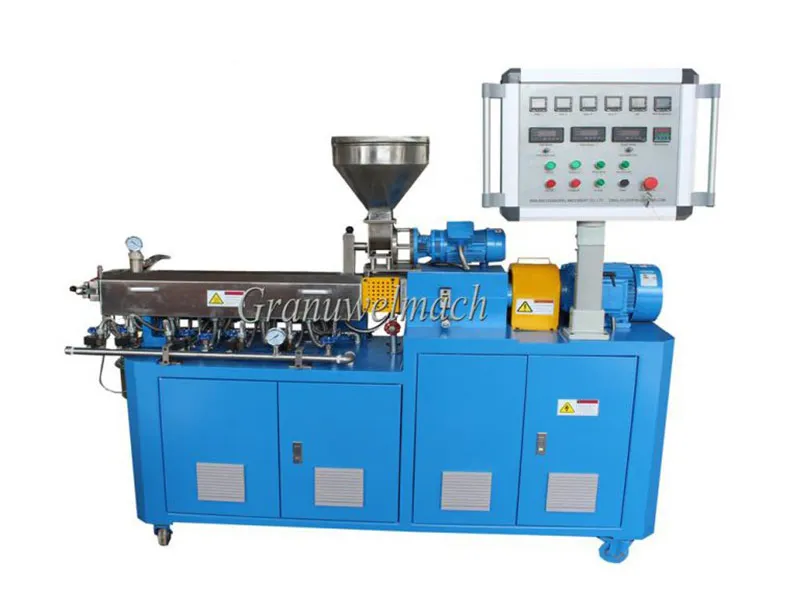
The primary focus of a laboratory plastic extruder is to provide consistent, reproducible results for experimentation and quality testing. Granuwel’s lab extruders exemplify these characteristics, offering enhanced control and versatility to meet a wide range of R&D needs.
What is a Plastic Extruder?
A plastic extruder, on the other hand, refers to a broad category of machines used in the continuous production of plastic compounding and pelletizing, plastic parts, profiles, and films on an industrial scale. They are designed to handle large volumes of raw materials and operate continuously, delivering high throughput and consistent quality. Industrial plastic extruders are characterized by:
- High Capacity:Engineered to handle substantial volumes of plastic materials with high efficiency, industrial extruders are capable of processing hundreds to thousands of kilograms per hour.
- Robust Construction:Built to withstand long hours of operation and the rigorous demands of mass production.
- Automation:Often integrated with advanced automation and control systems to ensure minimal human intervention and maximum efficiency.
- While laboratory extruders focus on experimental flexibility, standard plastic extruders prioritize high-volume production and consistent output.
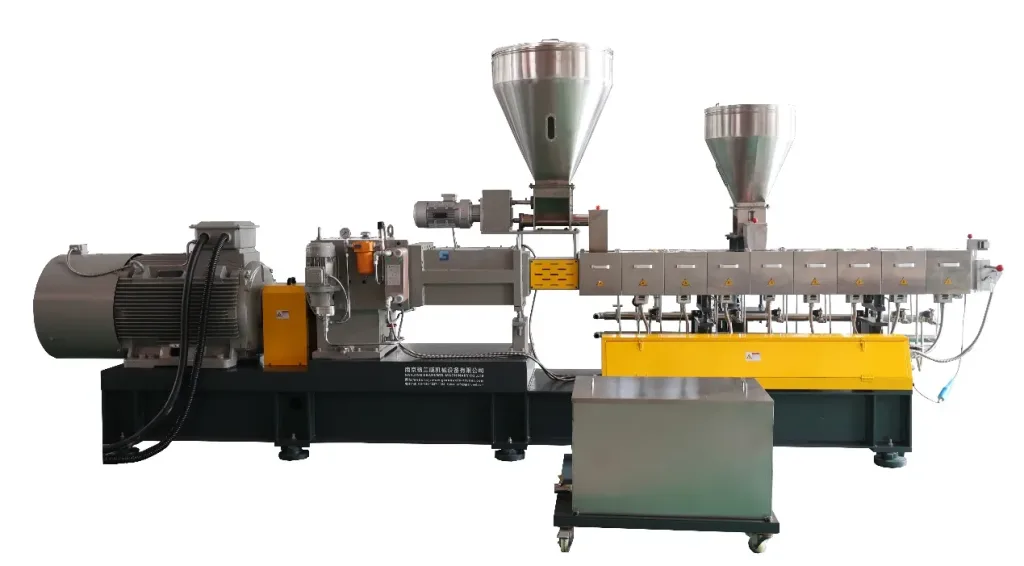
China Twin Screw Extruder Manufacturer, Twin Screw Extrusion Machine | Granuwel Machinery
Granuwel’s plastic twin screw extruders are widely used in high-performance processing equipment for different fields such as plastics, chemicals, food and pharmaceuticals. They are used for extrusion, pelletizing, material handling, etc. The twin-screw extruder range includes GTE-B Series Twin Screw Extruder, GTE-C Series Twin Screw Extruder and GTE-D Series Twin Screw Extruder.
Key Differences Between Laboratory and Industrial Plastic Extruders
Scale and Capacity
One of the most significant differences is the scale at which these machines operate. A laboratory plastic extruder is intended for small-scale production and testing, making it ideal for R&D purposes. In contrast, industrial plastic extruders are built for large-scale manufacturing, processing hundreds or even thousands of kilograms of material per hour.
Precision vs. Throughput
- Laboratory Plastic Extruder: Offers high precision with variable control over the extrusion parameters, allowing researchers to experiment with different formulations.
- Industrial Plastic Extruder: Emphasizes throughput and efficiency, often sacrificing some level of parameter flexibility in favor of maintaining high production rates.
Flexibility in Experimentation
The laboratory plastic extruder is particularly suited for trials and formulation development. Its versatility allows for rapid adjustments and fine-tuning during experiments. This flexibility is not as prominent in industrial extruders, which are optimized for consistency and output rather than variability.
Cost Considerations
Laboratory extruders typically have a lower upfront cost compared to full-scale industrial machines. However, the primary investment in a laboratory extruder is in the versatility and precision it provides, which is crucial during the product development phase. Conversely, industrial extruders require a larger capital investment due to their advanced features, durability, and capacity.
Applications of Laboratory Plastic Extruders
Laboratory plastic extruders are indispensable in settings where innovation and customization are required. Here are some key applications:
- Material particle specific application:
- PLA/PBAT + Starch Degradable Materials: Used to develop biodegradable plastics, suitable for disposable packaging and eco-friendly products.
- PP + Almond Shell Powder: Used to manufacture eco-friendly flower pots or other injection-molded products, enhancing the sustainability of the materials.
- TPU + Carbon Fiber: Used to develop high-performance elastomer materials, suitable for sports equipment or automotive components.
- PET + Glass Fiber: Used to enhance the mechanical properties of plastics, suitable for manufacturing high-strength engineering plastic products.
- PE + Wood Flour: Used to manufacture wood-plastic composites, suitable for outdoor furniture or building materials.
- Research and Development: R&D departments use laboratory plastic extruders to develop new plastic formulations, test additives, and evaluate material properties before committing to large-scale production.
- Quality Control: Laboratories employ these extruders to simulate production conditions and ensure that the final product meets quality standards.
- Education and Training: Academic institutions use laboratory plastic extruders in teaching settings to demonstrate the principles of plastic extrusion and polymer processing.
- Prototyping: Companies often use laboratory extruders to create prototypes of new plastic products, allowing for rapid iteration and design improvements.
- 3D Filament Printing: Laboratory extruders play a critical role in the production of 3D printing filaments, allowing for precise customization and formulation testing.
Benefits of Using a Laboratory Plastic Extruder
Investing in a laboratory plastic extruder offers numerous benefits, especially for businesses that prioritize innovation:
- Cost-Effective Development: By enabling small-scale testing and prototyping, laboratory extruders reduce the financial risks associated with scaling up production.
- Enhanced Process Understanding: Fine-tuned control over extrusion parameters helps researchers understand the material behavior under different conditions, leading to better process optimization.
- Improved Product Quality: Early identification of potential issues in the production process can lead to higher quality end products once the process is scaled up.
- Time Savings: Rapid prototyping and iterative testing significantly reduce the time required to bring new products to market.
- Advanced Control System: Equipped with Siemens PLC centralized control systems and touch screens, laboratory extruders offer high intelligence and ease of operation, enabling precise control of every production stage.
Challenges and Considerations
While laboratory plastic extruders are incredibly useful, there are some challenges to keep in mind:
- Limited Production Volume: They are not suitable for high-volume production, which means businesses must eventually transition to industrial extruders once the product is ready for mass production.
- Scale-Up Differences: The performance of a material in a laboratory setting may differ from its behavior in a large-scale industrial process. Bridging this gap requires careful consideration and additional testing.
- Maintenance and Calibration: Due to the precision required in laboratory settings, these extruders need regular maintenance and calibration to ensure accuracy and reliability.
Conclusion
The choice between a laboratory plastic extruder and a traditional plastic extruder ultimately depends on the specific needs of your operation. Laboratory extruders provide the flexibility, precision, and cost-effective environment necessary for research and development, making them an excellent choice for prototyping and quality control. On the other hand, industrial plastic extruders excel in high-volume, continuous production environments, delivering consistent and efficient output.
By understanding the differences outlined in this article and considering innovative solutions like those offered by Granuwel, businesses and research institutions can make informed decisions on which type of extruder best suits their goals. Whether you are innovating in a lab or scaling up production, the right extruder can significantly impact your success in the competitive world of plastic manufacturing.